- 1080p (2MP) · 1 lens
- Pan & tilt from the app
- Runs on the iCSee app
One lens on a 355° pan-tilt head, built as a black 4K 8MP camera or a white 3MP one, with an Ethernet port for the walls Wi-Fi cannot reach.
GESKS builds this pan-tilt camera in two versions that share a body, a head and an app. The black one records 4K 8MP at 24 frames a second; the white one records 3MP. Everything else, from the 355° pan to the Ethernet port, is common to both.
| Version | Resolution | Colour | Best spot |
|---|---|---|---|
| 8MP | 4K, 24fps | Black | A wide front yard, faces and parcels at distance |
| 3MP | 1296p | White | A patio, a back door, a smaller yard |
More pixels help most when you zoom in after the event. A 4K frame lets you crop into the far corner of the yard on playback and still make out a face; a 3MP frame shows the same corner softer. The resolution guide maps pixel count to identification distance.
The cost of 4K sits in storage and Wi-Fi. A bigger stream needs a steadier link and fills the card sooner, which is where the Ethernet port earns its place. GESKS puts continuous recording at about 4 to 5GB a day, so a 128GB card holds roughly 25 to 32 days before it starts overwriting.
Shared by both versions:
The white 3MP body suits a light-coloured wall or soffit where a black dome would stand out. The black 8MP body blends into dark trim and gives the sharper picture, so on a front elevation it is the one most installers would reach for first.
| Spec | Value |
|---|---|
| Model | IK-Q8-8MP (black), IK-Q8-3MP (white) |
| App | iCSee only |
| Resolution | 4K 8MP at 24fps (black); 3MP, 1296p (white) |
| Lens | Single lens on a pan-tilt head |
| Pan / tilt | 355° horizontal, 90° vertical |
| Video format | H.265, MP4 files |
| Night vision | White + infrared lamps; full-colour, infrared and smart modes; up to 65ft |
| Detection | Human detection with on-screen trajectory and auto tracking |
| Alerts | Push notification with snapshot or video clip |
| Audio | Two-way, built-in microphone and speaker |
| Sharing | Multi-user access |
| Network | 2.4GHz Wi-Fi or wired Ethernet |
| Local storage | microSD up to 128GB; about 4–5GB of continuous recording a day |
| Cloud | Optional; stores alarm clips |
| Third-party | ONVIF NVRs |
| Voice control | Alexa |
| Weather | Waterproof housing |
| Dimensions | 4.87 × 4.87 × 7.8in |
| Weight | 16oz (8MP), 0.53kg (3MP) |
| In the box | Camera, 12V US power adapter, bracket, screws, manual |
Most pan-tilt cameras on the iCSee app live or die by their Wi-Fi signal. The GESKS single-lens adds a network port, so a camera on a brick wall far from the router can take a cable instead and stop dropping out.
The cable carries the network connection. GESKS does not list Power over Ethernet, so plan on the 12V adapter and an outlet within reach. If you want one cable for both power and video, a PoE camera such as the HIKJBSET 5MP bullet does that job.
Finding the camera's IP address is where people stall when adding it to a recorder. GESKS gives the route in the app: tap the plus icon, choose Add Device, pick Other Ways to configure network at the bottom, then Nearby Cameras. The address is listed there.
Give the camera a reserved address on the router once it is wired. A recorder that finds the camera at the same address every day records every day; one that loses it after a power cut records nothing until someone notices.
The GESKS head carries both white lamps and infrared lamps, and the iCSee app switches between three ways of using them. Each fits a different kind of night on a property, and the choice changes what the recording shows.
GESKS quotes night vision up to 65ft, which covers a typical front yard or a driveway to the street. Beyond that, detail fades into shapes, and a plate at the kerb needs zoom rather than more light.
Human detection draws the person's path on screen and swings the head to follow them. When it spots someone, iCSee sends an alert to the phone with a snapshot or a short video. Multi-user sharing lets a partner or neighbour receive the same alert on their own account, with no password handed over.
Two-way audio completes the deterrent. From wherever you are, a voice through the speaker tells a visitor on the drive that someone is paying attention, and Alexa support adds voice control from an Alexa device at home.
For the first week, leave the camera on smart mode and read the alerts each morning. If a streetlight or a passing car keeps waking the white lamps, narrow the detection or switch that camera to infrared and let a neighbouring one carry the colour.
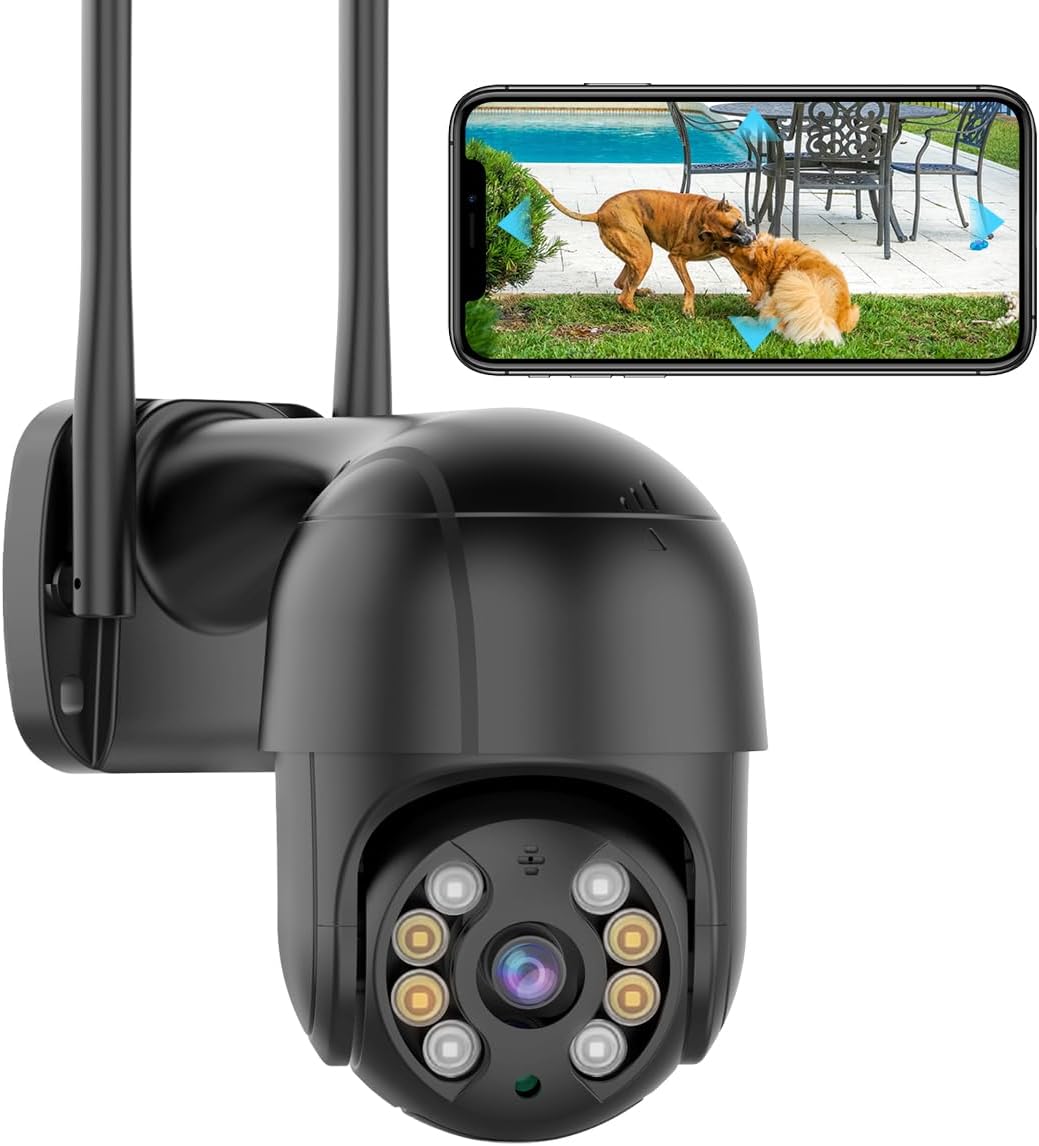
One lens on a moving head is the simplest camera to mount and the easiest to follow on a phone screen. The GESKS version stands apart from other single-lens domes on two counts: a 4K option and a wired network port.
| Camera | Lenses | Resolution | Network |
|---|---|---|---|
| GESKS single-lens | 1 | 4K 8MP or 3MP | Wi-Fi + Ethernet |
| BESDERSEC A6 | 1 | 1080p | 2.4GHz Wi-Fi |
| GESKS 6MP dual-lens | 2 | 3MP + 3MP | Wi-Fi + Ethernet |
| GESKS 4K triple-lens | 3 | 4K 8MP in total | 2.4GHz Wi-Fi |
The single-lens fits best when:
Step up to a dual-lens model when the yard is wide enough that the head turning away leaves a gap. The GESKS 6MP dual-lens comes from the same family and adds a fixed 3MP lens above the tracking one.
The two types also work well side by side. A common layout puts a dual-lens model on the front corner for the wide view and this single-lens 4K over the drive or back door, where one approach needs detail rather than breadth. Both answer to the same iCSee login and the same alert feed.
Mount either version under an eave, keep the cable joint pointing down, and check the first night's footage before trusting it with the drive. When a camera needs a fresh start, the reset guide points to the button's location.
Resolution and colour. The black version records 4K 8MP at 24fps; the white one records 3MP. Both share the pan-tilt head, Ethernet port and features.
Yes. It has an Ethernet port for a wired connection, but power still comes from the 12V adapter.
In iCSee, tap the plus icon, choose Add Device, then Other Ways to configure network, then Nearby Cameras.
No. GESKS states it works with iCSee only; recorders and PC software connect through ONVIF.
GESKS puts continuous recording at about 4–5GB a day, so roughly 25 to 32 days before the oldest footage is overwritten.